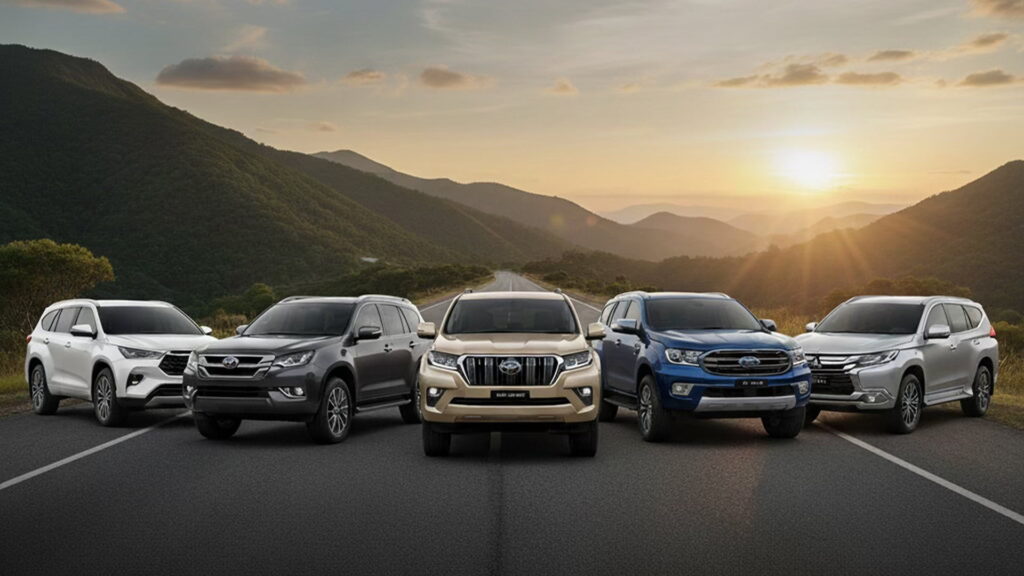
Looking for the best 7-seater SUV in Australia? We compare the top large SUVs for space, safety, value and real-world practicality -plus a smarter way to test drive before you commit.
We love large SUVs. We love them the way the British love complaining about the weather and Americans love putting cheese on things that don’t need cheese. With generous cabin space, commanding seating positions, and the ability to tackle everything from school runs to interstate road trips, the large 7-seater SUV has become as essential to Australian family life as zinc cream and meat pies.
But with prices ranging from $50,000 to well over $100,000, choosing the right one is not a decision to be made lightly. Get it wrong and you could spend the next five years quietly resenting your own car. In this guide, we’ll cut through the waffle to give you an honest assessment of the best large 7-seater SUVs available right now.
What makes a great 7-seater SUV?
Before diving into specific models, it’s worth understanding what separates a good 7-seater SUV from a great one:
- Genuine third-row space: Many 7-seaters have cramped rear seats suitable only for small children. The best offer adult-friendly third rows you can actually use.
- Fuel efficiency: With petrol prices fluctuating, hybrid powertrains are increasingly important for large SUVs.
- Towing capacity: If you’re towing a caravan, boat or trailer, you need at least 2,500kg and ideally 3,500kg.
- Real-world practicality: Reasonable boot space with all seats in use, ease of getting kids in and out, and day-to-day livability.
Quick Comparison: Best 7-seater SUVs at a glance
| Model | Fuel Economy (combined) (L/100km) | Seats | ANCAP Safety Rating | Third Row Legroom (cm) | Braked Towing (kg) | Best For |
| Toyota Kluger Hybrid | 5.6 | 7 | 5 | 71.0 | 2,000 | Fuel Economy |
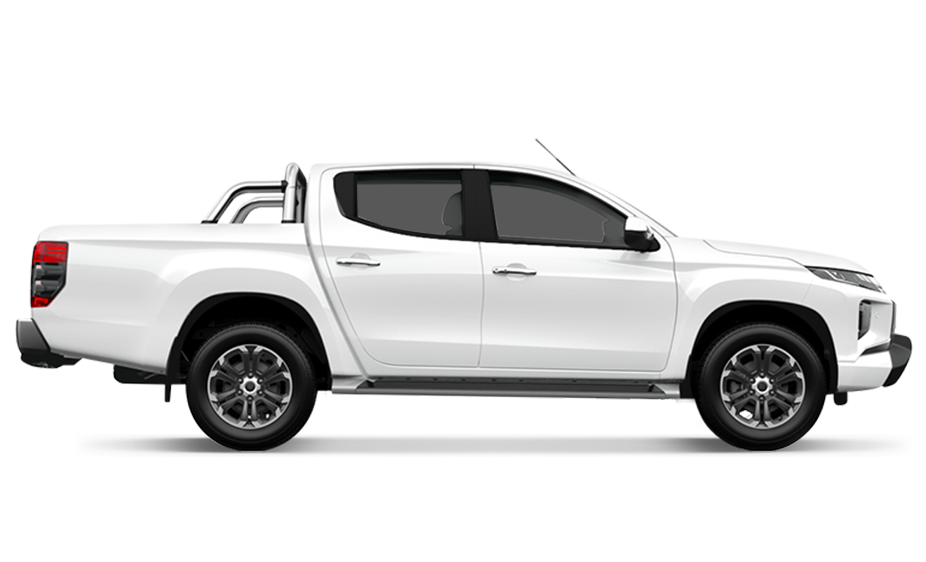
| Mitsubishi Pajero Sport | 8.0 | 5+2 | 5 | 69.5 | 3,100 | Value |
| Ford Everest | 10 | 5+2 | 5 | 80.6 | 3,500 | Touring |
| Isuzu MU-X | 8.0 | 7 | 5 | 85.0 | 3,500 | Reliability |
| Toyota Landcruiser Prado | 7.6 | 5+2 | 5 | 72.0 | 3,500 | Modern Tech |
Toyota Kluger Hybrid: The Best Overall
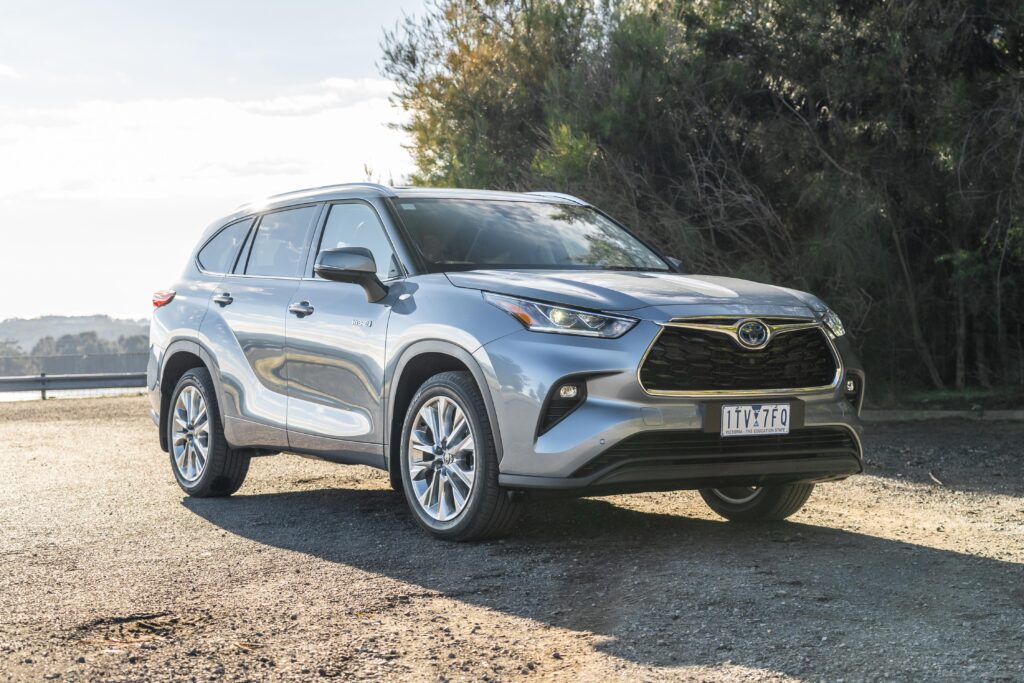
Price: From $60,920 (before on-road costs)
Karmo subscription starts at $375/week
Fuel economy: 5.6L/100km
Seating: 7 seats
Towing capacity: 2,000kg
The Toyota Kluger Hybrid is the SUV for families who have zero intention of ever climbing a mountain but want to feel like they’re driving a luxury lounge room. It trades the “truck-like” bounce of a 4×4 for a car-based platform, meaning it drives with the smoothness and car-park agility of a much smaller vehicle.
The real magic for families is hybrid efficiency. While other large SUVs guzzle fuel in school zone traffic, the Kluger can glide silently on electric power, dropping its fuel consumption to a tiny 5.6L/100km. This makes it one of the few seven-seaters that won’t blow the family budget at the petrol pump. Inside, the cabin is designed for “storage wars”, it’s famous for the massive center console bin (large enough for a handbag or a dozen juice boxes) and a clever dashboard shelf for phones and snacks.
The trade-off: This is a “soft-roader.” Its All-Wheel Drive system is designed to help you exit a wet grass driveway or stay stable on a rainy highway, not to go mud-plugging. If your family holidays involve deep sand or rocky trails, this isn’t the car for you.
The catch? The entry price is on the higher side and while more comfortable than most it still eats up almost all the boot space when in use. However, for the 95% of the time you are driving between home, work, and sport, the Kluger offers a level of quiet, refined comfort that other 7 seater SUVs cannot match.
The Toyota Kluger Hybrid is a staple of the Karmo fleet in Brisbane, Sydney and Melbourne, perfect for families who want erfect for families who want comfort, economy and daily space and luxury.
Mitsubishi Pajero Sport: Best Value for Active Families
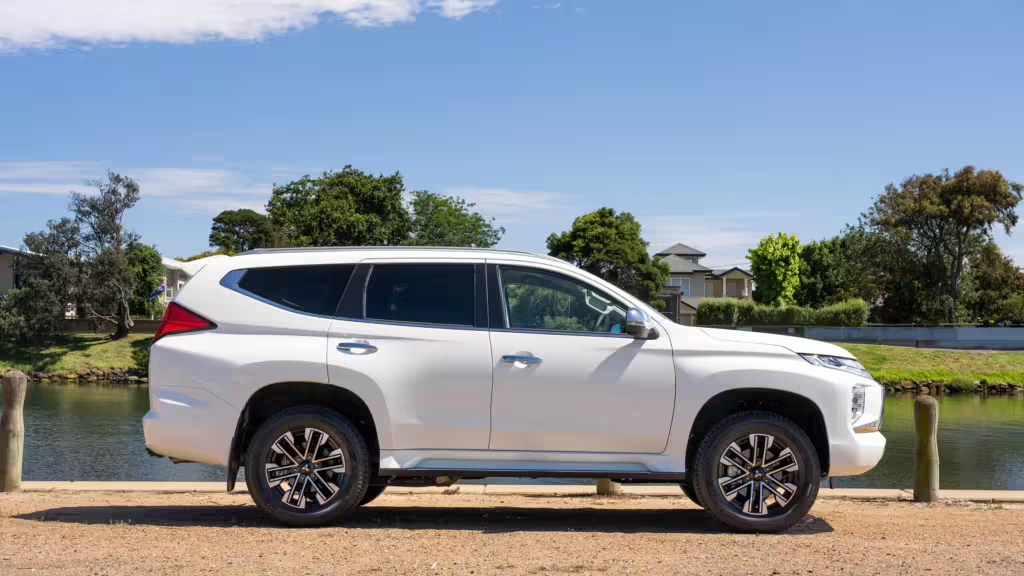
Price: From $44,940 (before on-road costs)
Karmo subscription starts from $375
Fuel economy: 8.0L/100km
Towing capacity: 3,100kg
The Mitsubishi Pajero Sport is the “sweet spot” for families who need a vehicle that can handle the weekday school run and the weekend camping trip without breaking the bank. While it’s built on a rugged chassis, it swaps out heavy-duty leaf springs for a more sophisticated coil-spring rear suspension, resulting in a ride that is much smoother and more “car-like” for kids in the back than a traditional ute-based SUV.
What makes it a family favorite is the Super Select II 4WD system. In most 4x4s, you can only use 4WD on dirt; on the Pajero Sport, you can engage it on wet, greasy suburban bitumen. This gives parents an extra layer of grip and safety during school pick-up in a downpour. Inside, the cabin is thoughtfully laid out with multiple USB ports and roof-mounted air vents for all three rows, ensuring the kids stay cool and their iPads stay charged during long holiday drives.
The trade-off: The interior is narrower than a Toyota Kluger or Hyundai Santa Fe. If you’re trying to fit three bulky child seats across the middle row, it’s a tight squeeze. The infotainment system is also basic; it has Apple CarPlay and Android Auto, but the graphics aren’t as slick as the twin-screen setups found in newer rivals.
The catch? The third-row seats fold up against the side of the cargo area (in some older configurations) or take up floor space, and they are definitely “kids-only” zones.
The Mitsubishi Pajero Sport is available on Karmo in Brisbane, Melbourne and Perth making it a great option for families to test if a rugged-but-refined SUV fits into their suburban garage before committing to a long-term loan.
Ford Everest: Best for Touring & Towing
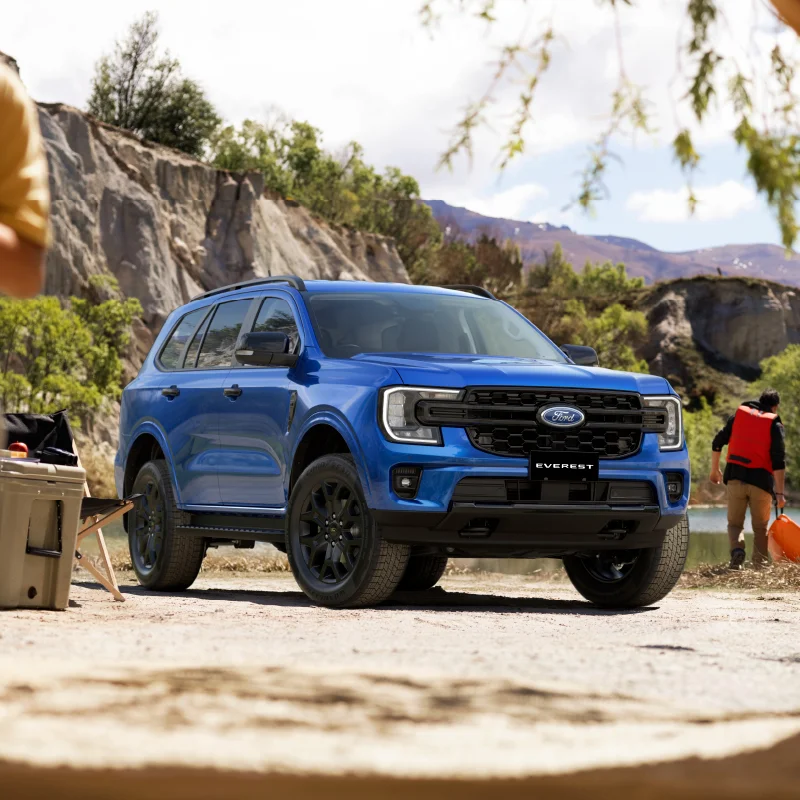
Price: From $54,420 (before on-road costs)
Karmo subscription starts from $399/week
Fuel economy: 10L/100km
Towing capacity: 3,500kg
If you need to tow a caravan, boat, or horse float then Ford Everest is the one. And here’s the important bit: it was designed and engineered in Australia, by Australians, for Australian conditions. The 3.0-litre V6 turbo-diesel produces a simply enormous amount of torque, which means towing 3,500kg feels about as stressful as towing a shopping trolley. It’ll also wade through rivers, climb over rocks, and generally behave like a proper 4×4 should.
The trade-off: Being a body-on-frame SUV (essentially a Ranger ute with a proper roof), the ride is firm. Around town, it jiggles a bit. It’s also thirstier – expect around 12L-14L/100km in the real world. But if you’ve got a boat to launch or a camper trailer to haul, you won’t care about any of that.
The catch? While the Ford Everest is a towing powerhouse, is its unapologetic focus on heavy-duty performance over suburban softness. Because it is built on a rugged truck chassis, it lacks the plush “pillowy” ride of a car-based SUV. Around town, you’ll feel the bumps and jiggles of the road more than you would in a softer family hauler. Additionally, that massive V6 engine comes with a thirst to match.
Available in Perth, why not try it out and discover whether it is the towing workhorse for your lifestyle before making a long-term commitment.
Isuzu MU-X: Best for Reliability
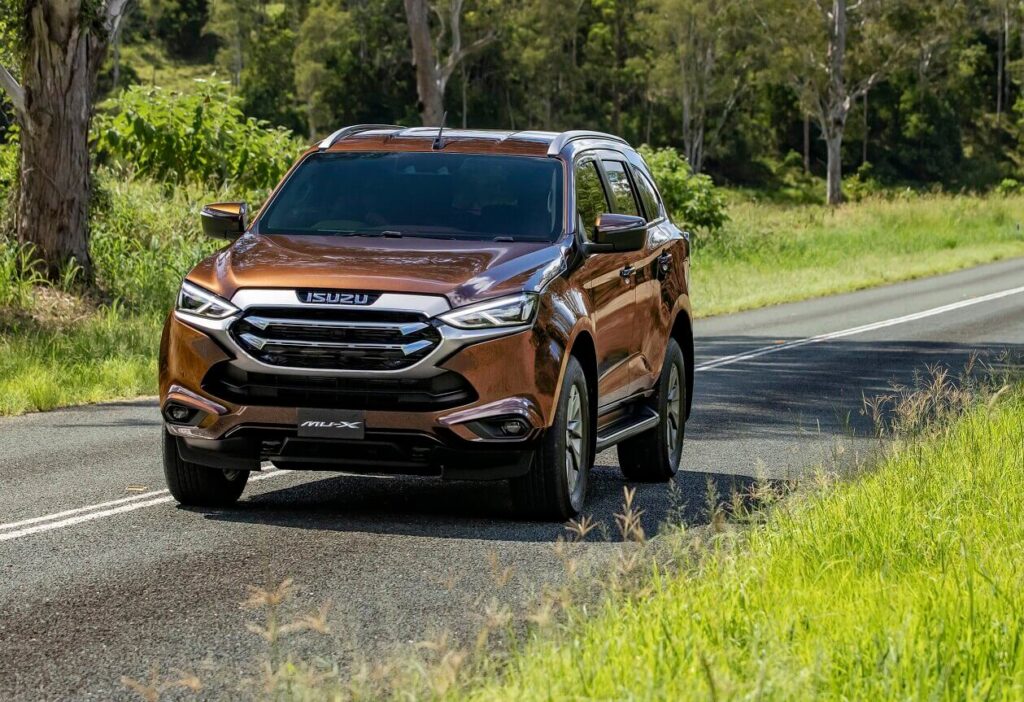
Price: From $48,900 (before on-road costs)
Karmo subscription starts from $385
Fuel economy: 8L/100km
Towing capacity: 3,500kg
The Isuzu MU-X doesn’t have the flashiest interior. It won’t make your neighbours jealous. The infotainment system won’t win any awards. But there’s one thing that’s given it a kind of ‘Simple Man’ reputation in the car world. It never breaks down.
The MU-X is what mining companies in the Pilbara use to ferry workers across landscapes that would make the surface of Mars look like a bowling green. It’s what cattle farmers in Far North Queensland trust to get them home when the wet season has turned their property into a swamp. They don’t care about ambient lighting or whether the dashboard has stitching, they care about one thing: will it start tomorrow morning? With the MU-X, the answer is always yes.
The 3.0-litre turbo-diesel is deliberately unstressed and understated. It produces enough torque to tow 3,500kg without breaking a sweat, returns around 7.1L-7.2L/100km on the highway, and will still be running reliably into its middle age!
The trade-off: Because the engine is built for longevity and heavy-duty work rather than speed, the MU-X can feel a bit “agricultural.” The 3.0-litre turbo-diesel is noisy, especially under acceleration, clattering away with a distinct truck-like soundtrack that reminds you of its commercial DNA. While it is incredibly sturdy, the interior plastics are hard-wearing rather than high-end; if you are looking for a luxury cabin with soft-touch surfaces and cutting-edge digital displays, you won’t find them here.
The catch? The biggest “catch” is Isuzu’s hyper-vigilant safety system. The MU-X comes with a suite of cameras and sensors that are incredibly sensitive, some might say over-protective. On narrow country lanes or in busy suburban traffic, the car is prone to “nanny-ing” the driver with frequent beeps, warnings, and steering wheel tugs. It’s undeniably safe, but if you’re a driver who finds constant electronic intervention distracting, you might find yourself diving into the settings menu to quieten it down before every trip. There is no petrol variant available and finding servos that offer diesel can be challenging.
The MU-X is available in Brisbane, Sydney, Perth and Adelaide which, if you think about it, is a rather brilliant way to discover whether you’re the sort of person who appreciates a vehicle that gets on with the job, or whether you prefer massage seats to feel alive.
Toyota LandCruiser Prado: Best for Modern Tech
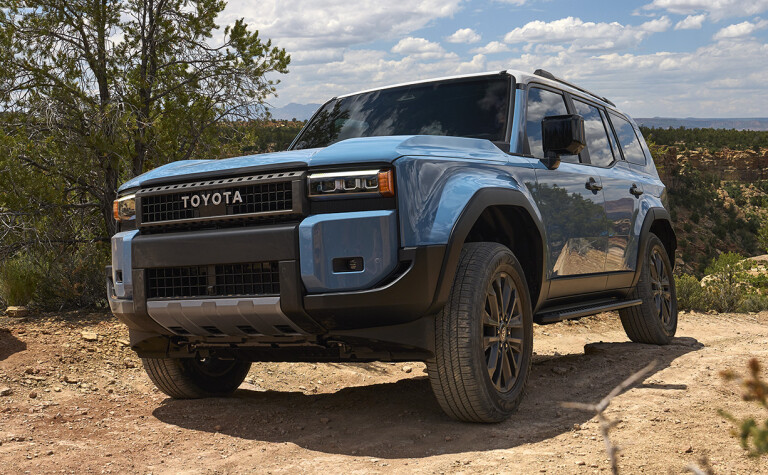
Price: From $72,500 (before on-road costs)
Karmo subscription from $470/ week
Fuel economy: 7.6L/100km
Towing capacity: 3,500kg
The Toyota Landcruiser Prado is, quite simply, everywhere. School drop-off zones are carpeted with them. And there’s a reason for that, it does everything well and breaks down approximately never.
The Prado is now better equipped, better looking and better to drive than ever. The 2.8-litre turbo-diesel delivers 150kW and 500Nm of torque, which is more than enough for towing the boat or caravan. In addition, the proper off-road credentials of low-range gearing, crawl control and multi-terrain select mean it’ll handle most tracks you’d sensibly attempt.
Inside, it is well equipped with safety tech and if you step up to the GXL you get synthetic leather, heated seats, ample leg room and a larger touchscreen.
The trade-off: While the Prado is the undisputed “Goldilocks” of the SUV world, its main compromise is performance on the open road. Because it is engineered for extreme durability and off-road articulation, it isn’t particularly fast or “zippy.” The 2.8-litre engine is a reliable workhorse, but when the car is fully loaded with a family, camping gear, and a caravan it can feel a little breathless during high-speed overtaking.
The catch? It’s not cheap.. And the third row, while usable, isn’t as spacious as other seven seaters on the list given the overall length is 16 feet and 4 inches.
The Toyota Landcruiser Prado is available in Brisbane, Sydney, Perth, Melbourne and Adelaide so you can try it out and decide if it suits your needs.
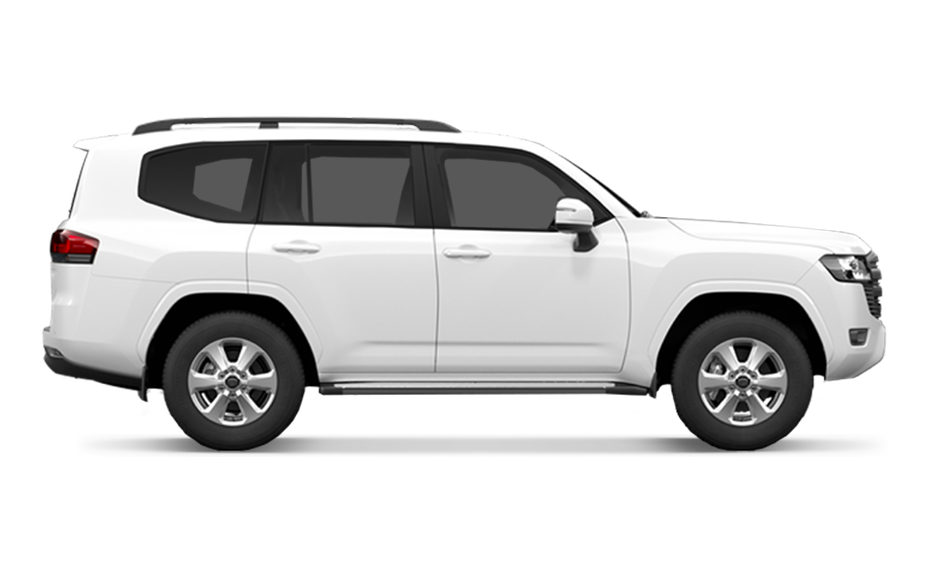
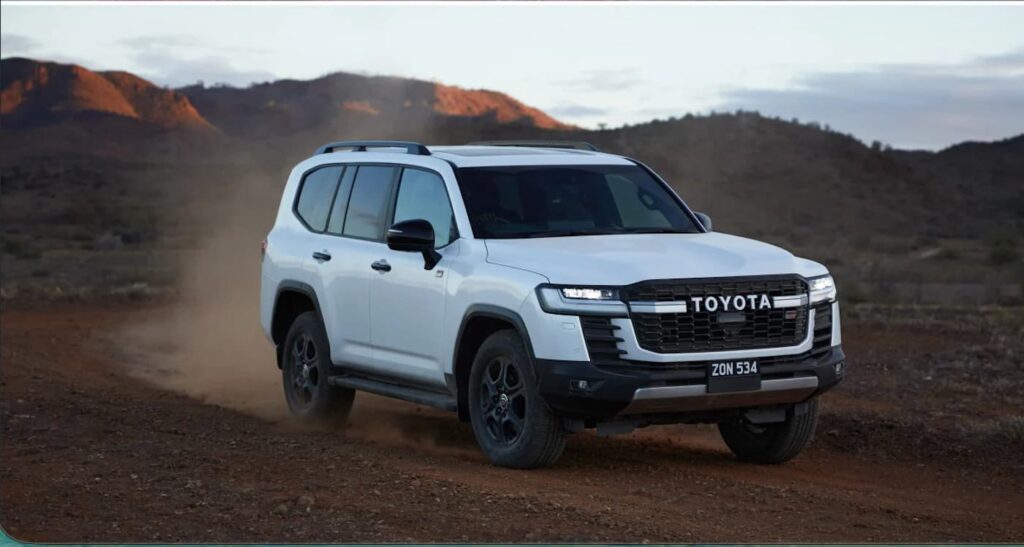
Honourable Mention: Toyota LandCruiser 300 Series
If budget isn’t a concern and you want the absolute best large 7-seater for touring, towing, and off-road capability, there’s only one answer: the LandCruiser 300 Series.
Starting from $86,790 (before on-roads), the LC300 is expensive but it’s also built to cover hundreds of thousands of kilometres across the harshest terrain on earth. The 3.3-litre V6 turbo-diesel produces 227kW and 700Nm, tows 3,500kg and will likely outlast your mortgage.
The Toyota LandCruiser 300 Series is available on Karmo from $599/week in Brisbane, Sydney and Perth so you can experience living with the ultimate 7 seater 4×4 without committing over $100,000.
Not sure which SUV is right for you? Try before you buy
Here’s the reality: reading and watching reviews only tells you so much. The best way to know if a large 7-seater SUV suits your family is to live with one. Don’t just take a 20-minute test drive, actually live with it for a few months.
That’s where a car subscription makes sense.
With Karmo you subscribe to an SUV, drive it for a few months, take it on that camping trip, see how it handles the school run – then decide.
Why subscribe instead of buy?
- No large upfront costs: Skip the deposit, stamp duty, and dealer negotiations.
- All-inclusive weekly fee: Insurance, registration, servicing, and roadside assistance included.
- Swap when your needs change: Outgrown the medium SUV? Switch to a large seven-seater.
- 30-day flexibility: Cancel or change with 30 days notice.
- Always drive a new car: Karmo vehicles are under 15,000km.
The bottom line
The best large SUV depends entirely on your needs and perspective. If you’re budget-conscious and want to save money on fuel while ferrying children to their various sporting activities, the Mitsubishi Pajero Sport is hard to beat. If you believe a car isn’t properly tested until it’s crossed the Simpson Desert while towing a caravan full of camping gear, the Ford Everest or Isuzu MU-X are what you need. And if you don’t actually need seven seats now but want the extra ‘just-in’case’ capacity, the Toyota Kluger Hybrid offers the best balance of everything.
The great news is that before spending $50,000 to $100,000 on a vehicle you’ll be committed to for years, Karmo can ensure you get to properly live with your preferred vehicle through subscription. A few months behind the wheel tells you more than any review ever could – it gives you the freedom and experience to make up your own mind!
Ready to find your perfect SUV?