For years, the Chery story in Australia was a story about price. It arrived in 2023 with the Omoda 5, undercut everything in sight and got filed away in most buyers’ minds as just another budget brand. That framing is now badly out of date.
According to vehicle sales data released by the Federal Chamber of Automotive Industries (FCAI) VFACTS Report, Chery Group hit a record fifth place on the national sales charts in May 2026, its 23rd consecutive month of growth, and the Chery brand alone grew 76.8% in H1 2026 to 24,964 units. That is not a value-badge nibbling at the edges. It is a mainstream player reshaping the Australian market alongside BYD and GWM.
More importantly, the product has also caught up with its growth ambition. Gripes that used to define the brand (nagging driver-assist chimes, droning transmission, thin equipment lists on entry grades) have been methodically engineered out, and nowhere more convincingly than in the all-electric E5 Ultimate.
So the question is no longer “should I look at a Chery?” it’s “which Chery?”. Do you want the electric E5 Ultimate, which is arguably the sharpest package in the entire Australian EV market right now? A category-defining Tiggo 4? The freshly re-engineered Omoda 5 (now sold as the C5)? Or the Tiggo 7, which happens to be the cheapest plug-in hybrid SUV in the country?
To cut through the noise, this guide evaluates Chery’s core SUV range available now, matching it to your daily lifestyle.
Quick comparison
| Model | Powertrain Type | Range / Efficiency | Boot Capacity | Driveaway From | Best For |
|---|---|---|---|---|---|
| Chery E5 Ultimate | Pure Electric (BEV) | Up to 430km (WLTP) | 300L / 1,079L folded + 19L frunk | $37,990 | Buyers who want a fully-loaded EV without the premium badge |
| Chery Tiggo 4 | Turbo Petrol or Hybrid (HEV) | 7.3L/100km petrol, 5.4L/100km hybrid | 380L / 1,225L folded | $23,990 | First-time SUV drivers and low-cost city commuting |
| Chery Omoda 5 (now C5) | Turbo Petrol | 6.9L/100km | 370L | $29,990 | Style-led small SUV buyers who want a proper gearbox |
| Chery Tiggo 7 | Turbo Petrol or Super Hybrid (PHEV) | Up to 93km EV-only (CSH) | 565L / 1,396L folded | $33,990 | Families wanting mid-size space and plug-in running costs |
Pricing as of August 2026. For latest pricing visit Chery’s website
The Chery SUV lineup in 2026
1. Chery E5 Ultimate: The best Chery you can drive
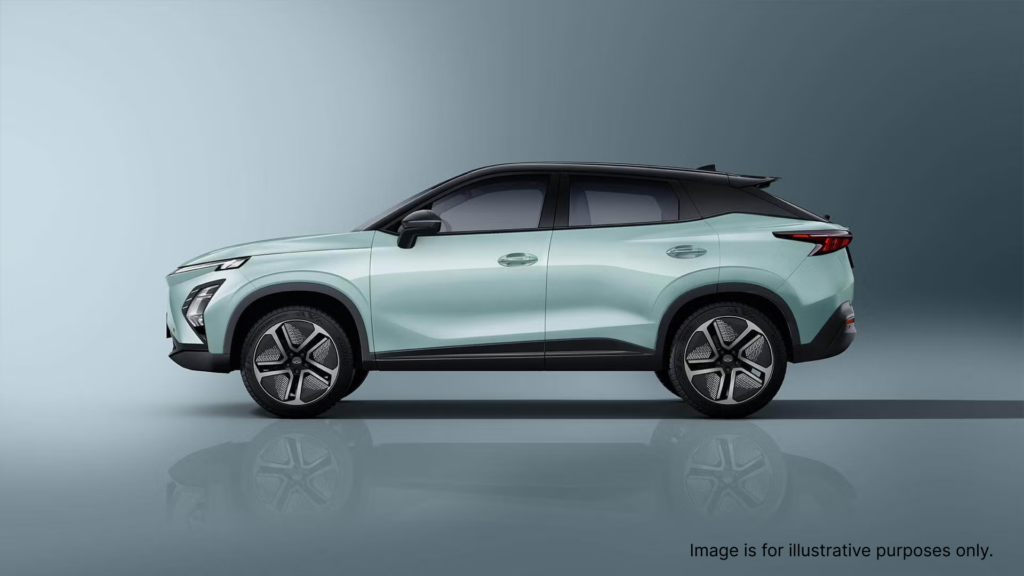
The Quick Specs: Pure Electric (BEV) | Variant: Ultimate (single grade) | Range: Up to 430km (WLTP) | Motor: 155kW / 288Nm | Battery: 58.9kWh LFP | DC Charging: Up to 130kW | Boot Space: 300L (1,079L folded)
Best For: Anyone who wants a genuinely well-equipped electric SUV and refuses to pay a premium badge tax for the privilege.
Recent Recognition: Holds a 5-star ANCAP safety rating against 2022 protocols, and is now positioned as one of the most accessible electric SUVs on the market, sitting below the entry-level Kia EV3 and well under the Hyundai Kona Electric.
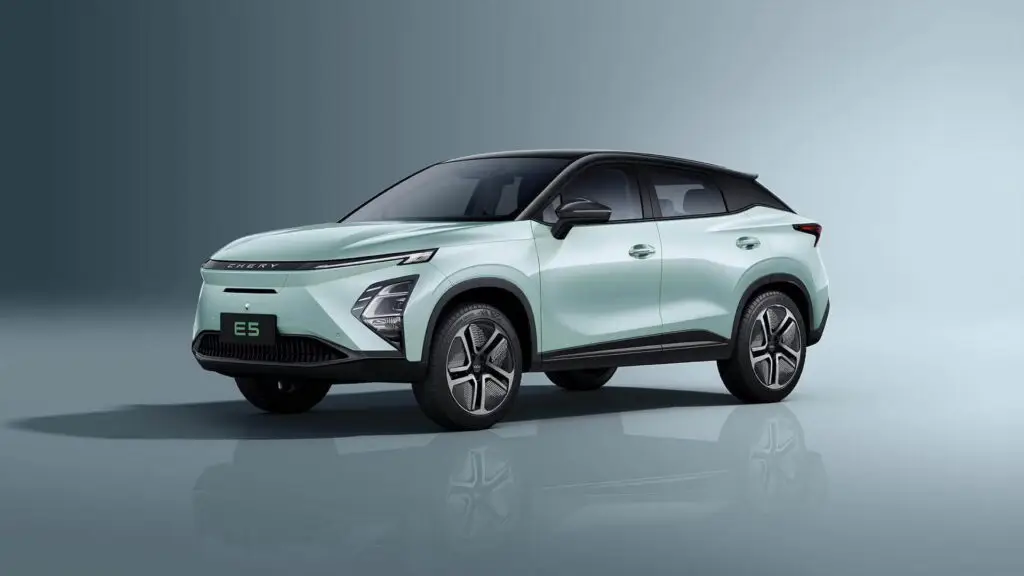
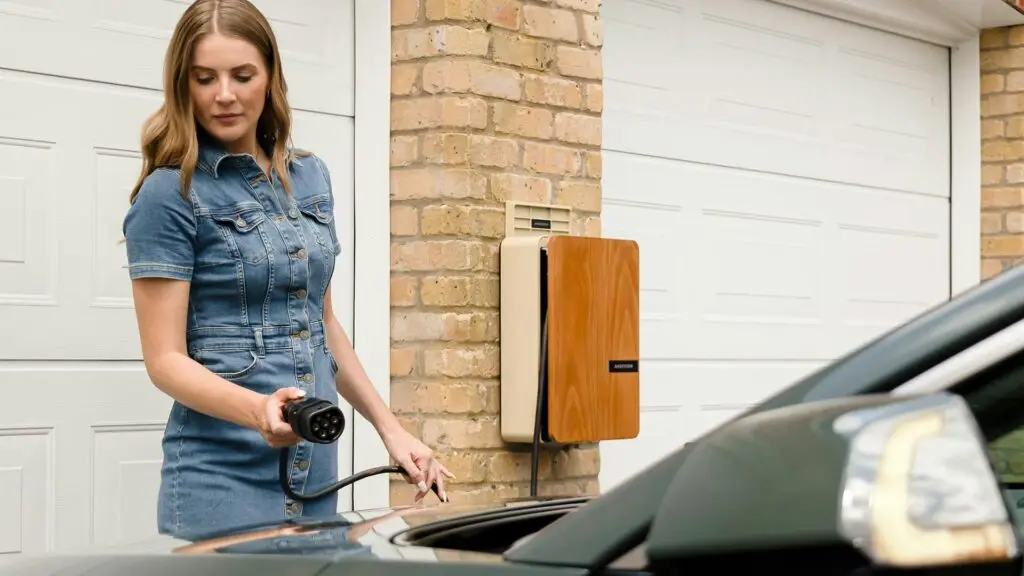
If you only drive one Chery, make it this one. For MY26, Chery did something unusual: it deleted the cheap entry grade and kept the fully-loaded Ultimate, then sharpened it further. The result is a car that used to be the range-topper, but is now the standard offering, with nothing held back including heated front and rear (outer) seats.
Equipment reads like a spec sheet from a class above; dual 12.3-inch curved displays, a power sunroof with retractable sunshade, synthetic leather upholstery, heated front and rear (outer) seats, a heated steering wheel, an eight-speaker Sony sound system, 360-degree camera, ambient lighting, a 50W wireless charger and a power tailgate. The 430km WLTP range is real-world usable for the vast majority of commuters, and DC charging at up to 130kW takes the battery from 30 to 80 per cent in around half an hour.
Where Chery has fixed things: this is the part that matters. Three long-running complaints about the brand have been directly addressed in the E5. First, the driver-assistance calibration: the over-eager lane-keep and driver-monitoring chimes that dominated early Chery reviews have been revised to something far less intrusive. Second, the drivetrain: there is no CVT to drone under load, because there’s no gearbox at all, just smooth single-speed electric delivery. Third, charging: the E5 supports DC fast charging at up to 130kW, with Chery quoting a 30 to 80 per cent top-up in around 30 minutes. These aren’t cosmetic tweaks. They’re the three things reviewers kept marking the brand down for, and now, they’re gone.
The Trade-off: A 300L boot with the seats up is modest for the segment, where 400L-plus is common. Folding the rear seats opens up a very usable 1,079L, but a full pram plus a weekly shop will test it.
The Catch: The 155kW front motor will scrabble for traction in the wet if you’re heavy with your right foot, a common trait for front-drive EVs with instant torque. Traction control intervenes quickly and cleanly, and the payoff is a car that feels genuinely quick away from the lights in a segment where that’s rare.
The Chery E5 Ultimate is available in:
 Sydneyfrom $289.00/weekView
2. Chery Tiggo 4: The one everybody’s driving
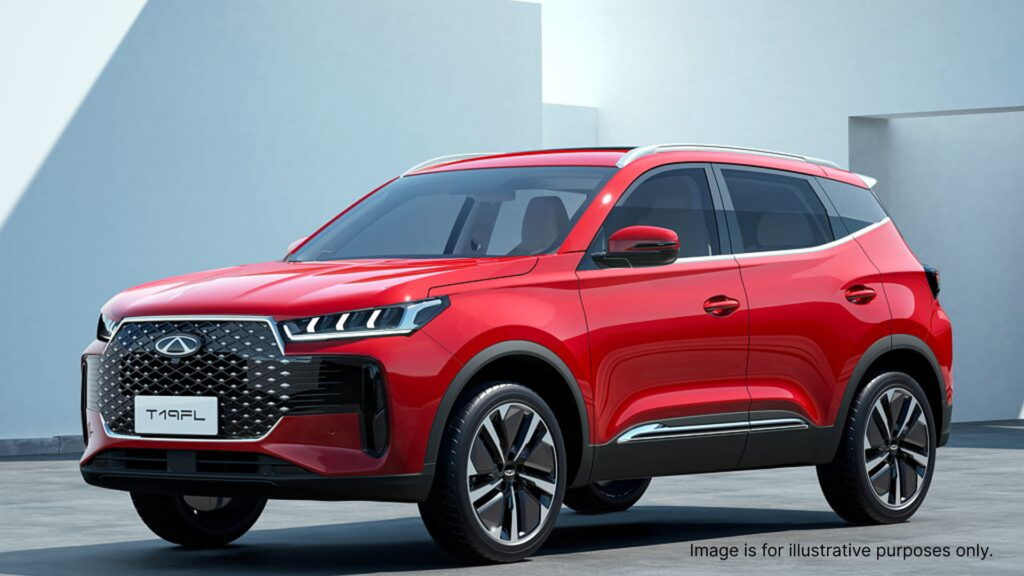
The Quick Specs: Turbo Petrol or Hybrid | Variants: Urban, Ultimate (both powertrains) | Engines: 1.5L turbo petrol (108kW/210Nm, CVT) or 1.5L hybrid (71kW/120Nm, single-speed DHT) | Fuel Use: 7.4L/100km petrol, from 5.4L/100km hybrid | Boot Space: up to 470L (VDA)
Best For: Drivers stepping into their first SUV, downsizers, and anyone who wants modern safety tech without a mid-size footprint.
Recent Recognition: Chery’s runaway best-seller, with 13,638 units delivered in the first half of 2026, up 70.6% year on year, and a regular fixture in Australia’s top 10 best-selling models. It holds a 5-star ANCAP rating and was also awarded Wheel’s Best Small SUV for 2025.
Tiggo 4 is the car doing the heavy lifting in Chery’s Australian sales surge, and it’s easy to see why. It’s the right size for our cities, and it doesn’t strip out any safety kit to hit its position: AEB, adaptive cruise, lane-keep assist and blind-spot monitoring are standard from the base Urban grade, alongside dual 10.25-inch displays and wireless smartphone mirroring.
Hybrid adds a genuinely useful efficiency step, dropping combined consumption to as low as 5.4L/100km, enough to undercut the Toyota Yaris Hybrid and the GWM Haval Jolion HEV while playing in the same fuel-economy ballpark.
The Trade-off: Underneath the modern styling and screens, this generation of Tiggo 4 is late in its global lifecycle, and you can feel it in the harder cabin plastics and the slightly dated switchgear. An all-new version is expected before long.
The Catch: The CVT in the petrol variants drones under hard acceleration, and it’s the least refined part of the car. In normal suburban driving it’s barely noticeable, and if it bothers you, the hybrid sidesteps the issue entirely with its single-speed hybrid transmission.
The Chery Tiggo 4 is available in:
- Sydneyfrom $255.00/weekView
3. Chery Omoda 5 (now the Chery C5): The style pick, re-engineered
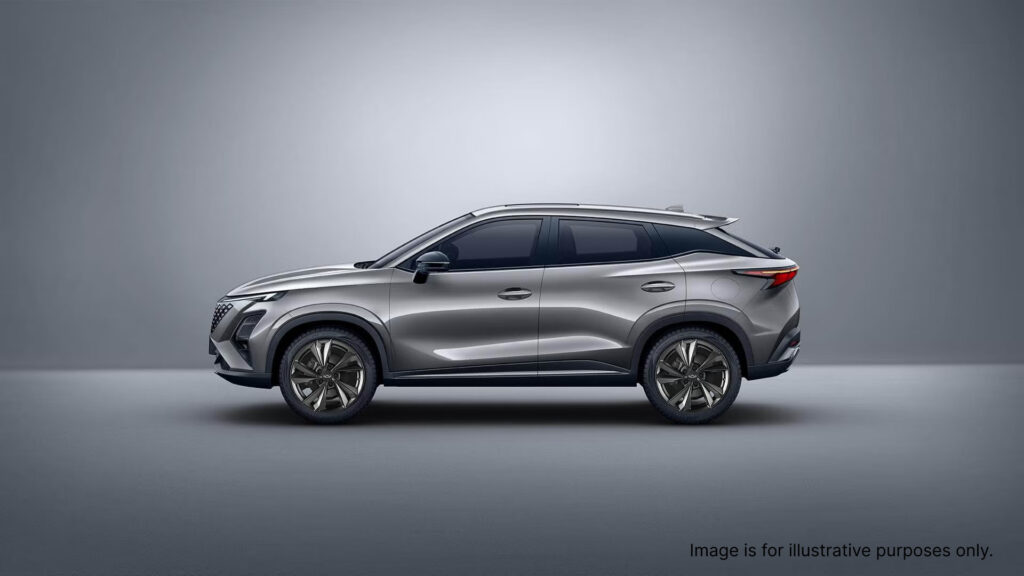
The Quick Specs: Turbo Petrol or Hybrid | Variants: Urban, Ultimate | Engine: 1.5L turbo petrol (108kW/210Nm) or 1.5L Turbo Hybrid ( 105kW/215Nm) | Transmission: 6-speed dual-clutch | Fuel Use: 6.9L/100km | Boot Space: 370L
Best For: Drivers who want the most distinctive-looking small SUV in the segment, with a cabin that punches above its class.
Recent Recognition: Omoda 5 relaunched Chery in Australia in 2023, with close to 13,000 units sold locally before the update. Holds a 5-star ANCAP rating against 2022 protocols.
If you go looking for an Omoda 5 today, you’ll find it wearing a C5 badge. Chery renamed the car in 2025 ahead of spinning Omoda out as a standalone brand, and used the moment to fix the two things reviewers kept flagging.
The CVT is gone, replaced by a six-speed dual-clutch automatic that gives the car actual gears and a much more decisive feel under throttle. The rear torsion beam has been swapped for a multi-link setup, which lifts both ride quality over broken suburban surfaces and composure through corners. Both are meaningful mechanical upgrades, not cosmetic ones.
Styling remains the drawcard, and that gradient-grid diamond grille is still one of the boldest faces in the segment. Looking at the top-grade Ultimate, you’ll enjoy 18-inch alloys, red brake calipers, a Sony eight-speaker system, synthetic leather, a power sunroof with retractable sunshade, dual-zone climate, a 360-degree camera and a powered tailgate. Both grades run dual 10.25-inch displays.
The Trade-off: At 370L, the boot trails the Tiggo 4 despite the C5 feeling like the more grown-up car. This is a design-first small SUV, and the sloping roofline takes its cut out of the cargo bay.
The Catch: Dual-clutch gearboxes can feel slightly hesitant in stop-start crawling traffic, a characteristic of the technology rather than a fault. Once you’re moving, the payoff is crisper shifts and better efficiency than the CVT it replaced.
4. Chery Tiggo 7: Australia’s cheapest plug-in hybrid family SUV
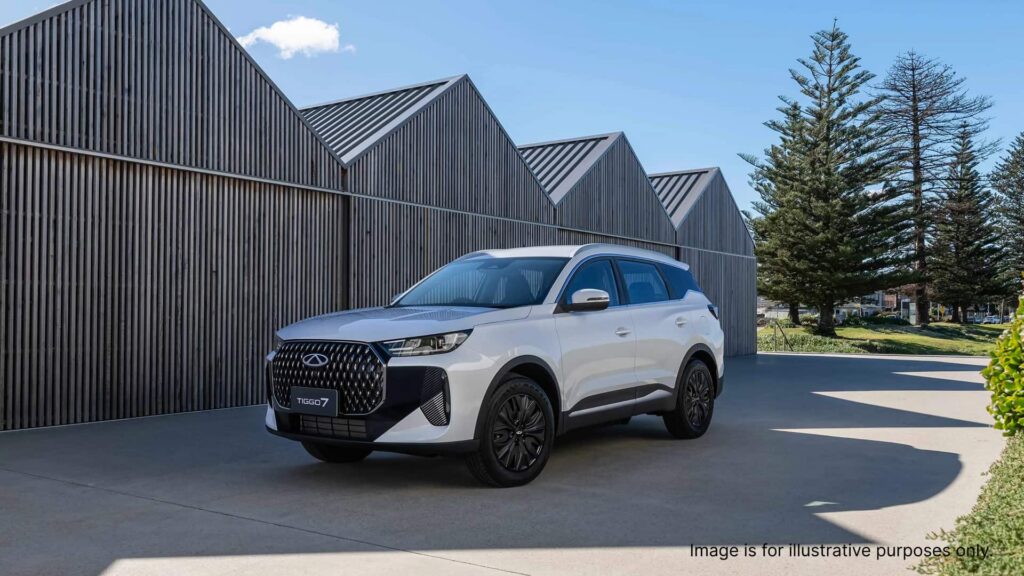
The Quick Specs: Turbo Petrol or Super Hybrid (PHEV) | Variants: Urban, Ultimate | Super Hybrid: 1.5L turbo petrol (105kW/215Nm) plus 150kW/310Nm electric motor | Battery: 18.4kWh LFP | EV Range: Up to 93km (NEDC) | Combined Range: up to 1,200km | Fuel Use: 1.4L/100km combined | Boot Space: 565L (1,396L folded)
Best For: Families who need mid-size space and want to do the school run, the commute and the shops on electricity, without going fully electric.
Recent Recognition: It is their fastest-growing model, with 5,589 delivered in the first half of 2026, up 172.6% year on year. It is also the only car in this guide with a 5-star ANCAP rating against the current 2025 protocols.
The Tiggo 7 Super Hybrid has made the rest of the PHEV market look expensive. Undercutting the BYD Sealion 6, MG HS and Mitsubishi Outlander, it pairs a 105kW turbo petrol engine with a 150kW electric motor and delivers up to 93km of pure electric range on the NEDC cycle, comfortably more than the average Australian daily commute. Chery quotes 1.4L/100km combined and up to 1,200km of total range on one tank and one charge.
Practicality is the other half of the pitch. The boot reportedly measures 565L with the seats up, which is genuinely large for a car that’s slightly more compact than most mid-sizers on the outside. It’s long and flat and there’s under-floor storage on top of that. Inside, dual 12.3-inch screens, wireless CarPlay and Android Auto, generous synthetic leather and, crucially, a sensible balance of physical buttons alongside the touchscreen.
The Trade-off: The battery ate the spare wheel. You get a tyre repair kit instead, which is increasingly normal in 2026 but worth knowing if you spend time on regional roads.
The Catch: Tiggo 7 doesn’t have the sharpest dynamics in the class, as it’s tuned for comfort and efficiency rather than back-road entertainment. For the family this car is built for, that’s the right call, and the payoff is a compliant, quiet ride and a car that barely touches its fuel tank on the weekly routine.
Chery vs GWM vs BYD: How the big three Chinese brands actually compare
These three brands now dominate the value end of the Australian SUV market, and they’re increasingly cross-shopped against each other rather than against the legacy badges. Here’s where each one genuinely leads, and where Chery makes the more sensible case.
| Item | Chery | GWM | BYD |
|---|---|---|---|
| Core strength | Feature-per-dollar and everyday usability | Rugged 4×4 and off-road capability | EV and PHEV engineering depth |
| Electrified spread | EV, hybrid and plug-in hybrid | Hybrid, plug-in hybrid, 4×4 PHEV | EV and Super Hybrid across the range |
| Body styles | Small to large SUV | SUV, off-roader, ute | Hatch, SUV, 7-seater, ute |
Where Chery excels:
Equipment you don’t have to option
The E5 Ultimate is a single, fully-loaded grade. Heated rear (outer) seats, a power sunroof, a Sony system, a 360-degree camera and dual 12.3-inch displays are simply included, with no trim walk and no options list. Across the range, Chery consistently puts more standard kit in front of you than either rival at an equivalent position.
The most accessible plug-in hybrid in the country
The Tiggo 7 Super Hybrid delivers up to 93km of electric range and undercuts the BYD Sealion 6 to do it. For a family that wants to stop buying petrol on weekdays without committing to a full EV, it’s the lowest-barrier entry point on the market.
Two paths to electrification, not one
BYD is a pure electrified brand, so every car is a BEV or a plug-in hybrid. Chery lets you choose your pace: conventional petrol, a self-charging hybrid with no charging habits to build, a plug-in Super Hybrid, or a full EV. If you’re not ready to plug in yet but want the option later, that flexibility matters.
A brand that visibly listens to its customers
The intrusive ADAS calibration that reviewers hammered Chery for at launch has been noticeably retuned, and the CVT has been engineered out of the C5 in favour of a dual-clutch. That’s a brand responding to feedback within a single product cycle.
Where the others still lead:
GWM remains the stronger choice if you actually go off-road, because the Tank range and its Hi4-T plug-in 4×4 system have no Chery equivalent. BYD has the deeper electric portfolio and the more established EV engineering story, with Blade Battery technology, a broader model range from city hatch to 7-seater to ute, and the highest EV sales volume in Australia. If you want maximum pure-electric choice, BYD is the way to go.
Want the full picture on the other two? Read our companion guides: The GWM SUV range explained and The ultimate 2026 BYD guide.
Forget depreciation risk with car subscription
Here’s a reality car reviews rarely mention: committing to a multi-year contract on a brand-new vehicle from a fast-moving brand carries a hidden sting.
Chery cut the price of the E5 Ultimate substantially in a single model year. That’s excellent news if you’re getting into one today, and a warning sign if you locked yourself in last year. When a brand is growing at more than 76% annually, expanding its dealer network, launching new sub-brands and repricing aggressively to win market share, the values of current models are being reset underneath you in real time.
Layer on the pace of the technology itself (better batteries, faster charging, longer plug-in hybrid ranges arriving every twelve months) and locking yourself into a five-year commitment feels less like an investment and more like a bet on a market that’s still finding its level.
How Karmo rewrites the script
A Karmo car subscription completely changes the game, giving you a clever way to enjoy the latest vehicle technology with zero long-term financial risk. You get all the benefits of driving a brand-new car while we absorb the burdens of depreciation and market shifts.
By switching to a subscription model, you unlock distinct advantages:
Complete protection from depreciation: Because you don’t own the asset, sudden price cuts, used-market swings and shifting battery tech never rest on your shoulders.
Highly flexible timelines: Drive any new Chery model on a flexible plan starting from a minimum of just 4 months, giving you absolute control over your mobility.
One predictable, bundled payment: You choose the payment frequency, and we bundle comprehensive insurance, registration, routine servicing and 24/7 roadside assistance into a single, bundled package.
Total upgrade freedom: If a longer-range Chery debuts next year, or if your needs shift, you aren’t trapped. Hand back the keys or seamlessly swap into a different model.
The bottom line
Chery E5 Ultimate: If you want the standout of the range: one fully-loaded grade, 430km of electric range and the three biggest Chery criticisms engineered out.
Chery Tiggo 4: If you want a compact, 5-star-rated SUV that’s easy to live with in the city, with a hybrid option if you rack up urban kilometres.
Chery Omoda 5 / C5: If you want the boldest styling in the small SUV class, now backed by a proper dual-clutch gearbox and multi-link rear suspension.
Chery Tiggo 7: If you need real mid-size family space and want Australia’s most accessible plug-in hybrid, with up to 93km (NEDC) of electric-only commuting and 1,200km of combined range.
Chery FAQs
Is Chery a good car?
Yes. Chery delivers among the strongest feature-per-dollar equations in the local market, and its local reputation has improved markedly as it has addressed early criticisms around driver-assistance calibration and drivetrain refinement. The genuine open questions are long-term resale values (the brand simply hasn’t been here long enough to have settled data) and service network capacity in some regional areas as volumes climb. A car subscription sidesteps both of those ownership risks entirely.
What’s the difference between the Chery Tiggo 4, Tiggo 7 and Tiggo 8?
Size, in ascending order. The Tiggo 4 is the small SUV and the volume seller, the Tiggo 7 is the five-seat mid-sizer, and the Tiggo 8 Pro Max steps up to a larger seven-seat body. Electrification options broaden as you move up: hybrid in the Tiggo 4, Super Hybrid plug-in in the Tiggo 7, Tiggo 8 and Tiggo 9.
Why can’t I find the Omoda 5 in Chery showrooms anymore?
It’s still there. It’s just called the C5. Chery renamed the Omoda 5 to C5 in 2025 because it was preparing to launch Omoda as a standalone brand in Australia. The electric Omoda E5 was renamed the E5 at the same time. Same cars, new badges, plus meaningful mechanical updates in the C5’s case.
Do all Chery SUVs have a 5-star ANCAP rating?
The core range does, but the test year matters. The Tiggo 7 Super Hybrid holds a 5-star rating against the current 2025 protocols, which are the toughest of the group. The Tiggo 4 also holds a 5-star rating, while the E5 and C5 were both rated five stars against 2022 protocols. Ratings are model- and build-date specific, so it’s always worth confirming the exact variant and build year you’re looking at on the ANCAP website.
Do I need to plug in the Tiggo 7 Super Hybrid?
No. Charging it overnight from a home wall socket or public charger unlocks up to 93km (NEDC) of near-zero-cost electric driving, which covers most Australian commutes. But if you never plug in, the car simply operates as a conventional hybrid using the petrol engine and regenerative braking. You’ll spend more on fuel, but you’ll never be stranded by a flat battery.
Who makes Chery cars?
Chery vehicles are manufactured by Chery Automobile Co., Ltd., a Chinese automotive company headquartered in Wuhu, China. Founded in 1997, Chery has grown into one of China’s largest auto exporters, distributing vehicles across more than 80 countries. Chery’s portfolio includes brands like Omoda, Jaecoo, Jetour, Exeed, and iCar.